
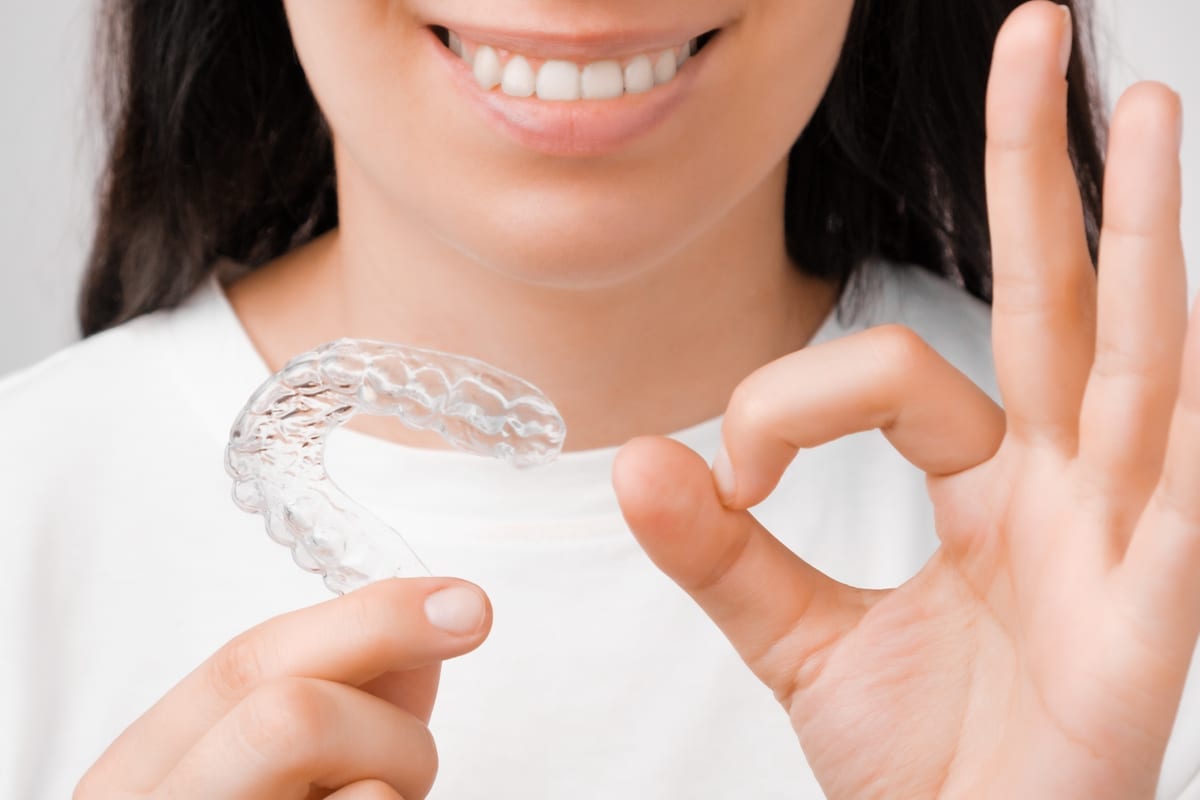
If you are an adult thinking about straightening your teeth, you have probably asked this question: Invisalign vs. braces — which actually works better for adults in Houston? It is one of the most common questions Dr. Jim Watson hears at Watson Orthodontics. Both options can deliver beautiful, lasting results. But they work differently, feel different, and suit different lifestyles. This guide will help you understand the real differences so you can make a confident, informed decision.
Comfort and Daily Life: Invisalign vs. Braces for Houston Adults
Comfort matters a lot when you are an adult in a busy city like Houston. Invisalign aligners are made from smooth, flexible plastic. They sit snugly over your teeth without metal brackets or wires. Most adults find them significantly more comfortable day-to-day.
Traditional braces use metal brackets bonded to each tooth. They are connected by wires that apply steady pressure. Some adults experience soreness, especially after adjustments. Sharp edges can occasionally irritate the inside of your cheeks.
Invisalign also makes eating much simpler. You remove the aligners before every meal. There are no food restrictions, and cleaning your teeth stays straightforward. With braces, you need to avoid hard, sticky, or crunchy foods throughout treatment.
- Invisalign: removable, no dietary restrictions, smooth plastic surface
- Braces: fixed appliances, require food modifications, occasional wire irritation
- Both: may cause mild soreness when pressure is first applied
- Adults with active lifestyles often prefer the flexibility of Invisalign
Visibility and Confidence: How Each Option Looks at Work and in Social Settings
For many Houston adults, appearance is a major factor in this decision. Invisalign aligners are nearly invisible when worn. Colleagues, clients, and friends are unlikely to notice them during conversations or meetings.
Traditional braces are clearly visible. Metal brackets and wires are noticeable up close. Ceramic braces offer a tooth-colored alternative that blends in better. However, they are still more visible than clear aligners.
If you regularly present in professional settings or attend social events, Invisalign may feel like a more natural fit. That said, many adults wear traditional braces confidently and without self-consciousness. Your comfort with the look is a personal decision worth discussing with Dr. Watson.
Treatment Effectiveness and Scope: Which Option Handles More Cases?
This is where the comparison gets more nuanced. Modern Invisalign technology has improved dramatically over the past decade. It can now treat a wide range of alignment issues in adults, including crowding, spacing, overbites, and underbites.
However, complex orthodontic cases may still require traditional braces. Severe bite problems, significant tooth rotation, or large vertical movements are often handled more predictably with fixed appliances. Dr. Jim Watson evaluates each patient individually to determine the best path forward.
One critical factor with Invisalign is compliance. The aligners must be worn 20 to 22 hours per day to work as planned. Adults who are disciplined and consistent typically see excellent results. If you frequently forget to put them back in, treatment timelines can stretch.
- Invisalign works well for mild to moderate crowding and spacing
- Braces are often preferred for complex bite corrections
- Both treatments require regular monitoring appointments
- Invisalign requires strict daily wear discipline to stay on track
- Your specific dental anatomy determines which option is most effective
At Watson Orthodontics, we offer Orthodontics For All Ages Houston patients can rely on — from teens to working professionals. Every treatment plan is tailored to your unique bite, lifestyle, and goals.
Cost and Treatment Timeline: What Adults in Houston Should Expect
Cost is a practical consideration for most adults. Invisalign and braces are often comparable in price, though this varies by case complexity. Invisalign tends to cost slightly more on average due to the technology involved in manufacturing custom aligners.
Treatment timelines are also similar. Most adults complete orthodontic treatment in 12 to 24 months. Simpler cases may finish faster. More complex alignment issues take longer, regardless of which method you choose.
Braces are sometimes more cost-effective for complex cases that would require additional Invisalign refinements. Refinements are extra aligner sets made when adjustments are needed mid-treatment. They can add time and cost to the process if significant changes arise.
Watson Orthodontics serves patients across the greater Houston area, including Spring, TX. Our team proudly provides Orthodontics Spring Tx Houston residents trust for clear, honest treatment planning and fair pricing. We walk you through all your options before you commit to anything.
How to Decide: Questions to Ask Yourself Before Choosing
Choosing between Invisalign and braces is not just a clinical decision. Your lifestyle, habits, and personal priorities all play a role. Dr. Watson recommends thinking through a few key questions before your consultation.
Ask yourself how disciplined you are about wearing a removable appliance. Consider how visible your treatment needs to be at work or in social settings. Think about whether your case is straightforward or complex. And consider how long you are comfortable being in active treatment.
There is no universally correct answer. Some adults are ideal Invisalign candidates. Others get faster or more predictable results from braces. The best way to find out is through a thorough in-person evaluation with an experienced orthodontist in Houston.
Making the Right Choice at Watson Orthodontics in Houston
Dr. Jim Watson and the team at Watson Orthodontics are committed to helping Houston adults make confident, well-informed decisions about their smile. We do not push one option over the other. Our goal is to match the treatment to your specific needs, goals, and lifestyle.
Whether you lean toward Invisalign or traditional braces, we will walk you through every detail — expected timeline, what to expect at each stage, and how to care for your teeth throughout treatment. You deserve a plan that fits your life, not a one-size-fits-all solution.
Houston adults who want straighter teeth and a healthier bite are welcome at our practice. We make orthodontic care accessible, educational, and supportive from your very first visit. Book Now to schedule your appointment with our team.
Frequently Asked Questions
Is Invisalign really as effective as braces for adults?
For mild to moderate alignment issues, Invisalign is highly effective for adults. Modern aligner technology can treat crowding, spacing, and many bite problems. Complex cases may still benefit more from traditional braces. Dr. Watson will evaluate your specific situation and recommend the most effective option for your needs.
How long does Invisalign treatment take for adults in Houston?
Most adult Invisalign patients in Houston complete treatment in 12 to 18 months. More complex cases can take up to 24 months. Compliance plays a big role — wearing aligners 20 to 22 hours daily keeps treatment on schedule. Skipping wear time can significantly extend your timeline.
Do braces or Invisalign hurt more for adults?
Both options can cause mild soreness when pressure is first applied. Invisalign tends to feel more comfortable day-to-day because the plastic is smooth and there are no brackets or wires. Braces can occasionally cause irritation to the cheeks or lips. Most adults adapt to either option within the first few weeks.
Can adults with missing teeth or dental work still get Invisalign?
It depends on the specific situation. Adults with crowns, bridges, or implants may still be Invisalign candidates. However, certain dental work can limit how aligners attach and move teeth. Dr. Watson will review your dental history during your consultation and advise you on the best approach for your case.
What happens after braces or Invisalign treatment is complete?
After active treatment ends, retainers are necessary to keep your teeth in their new positions. This applies to both Invisalign and braces patients. Most adults wear retainers at night long-term to maintain their results. Skipping retainer wear is the most common reason teeth shift back after orthodontic treatment.