
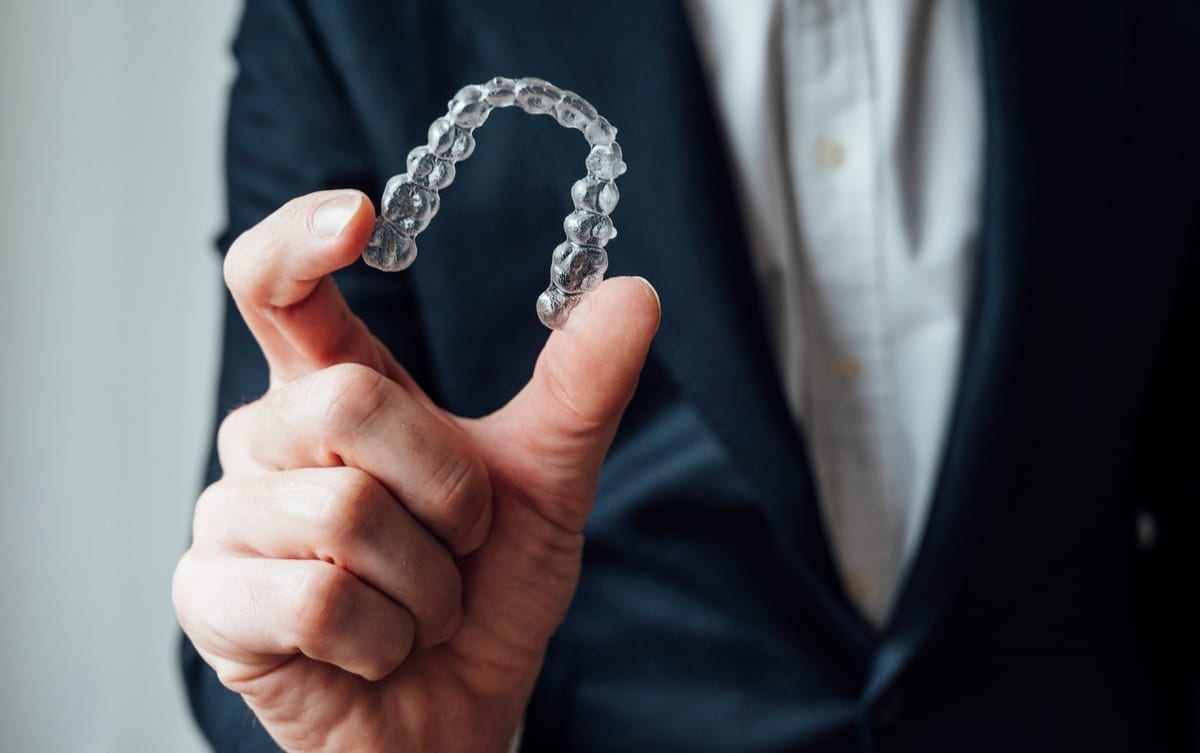
One of the most common questions Dr. Jim Watson hears at Watson Orthodontics – Spring is simple: How long will my Invisalign treatment actually take? Your Invisalign timeline in Spring can range anywhere from 6 to 24 months. That wide range surprises many patients. Understanding what drives that range helps you set realistic expectations — and take control of your own results. Several key factors influence how quickly you finish, and compliance is the biggest one of all.
What Is the Average Invisalign Timeline in Spring, TX?
Most adult patients complete Invisalign treatment in 12 to 18 months. Teens may follow a similar schedule depending on their case complexity. However, mild crowding or spacing issues can resolve in as few as 6 months. More complex bite problems — like significant overbites or underbites — often require closer to 20 to 24 months.
At Orthodontics Spring Tx, Dr. Watson evaluates each patient individually. He uses digital scans and bite mapping to estimate your specific timeline during your consultation. No two mouths are the same, and no two timelines should be either.
Think of your timeline as a roadmap, not a guarantee. Following that map closely — or cutting corners — determines how quickly you arrive at your destination smile.
Factors That Shorten Your Invisalign Treatment Time
Some patients genuinely finish faster than average. This is not luck. It comes down to a combination of case complexity and patient behavior. Here are the key factors that can speed up your Invisalign journey:
- Mild to moderate alignment issues — Less complex cases naturally require fewer aligner trays.
- Wearing aligners 20 to 22 hours per day — Consistent wear is the single biggest accelerator.
- Changing trays on schedule — Following Dr. Watson’s tray progression timeline prevents delays.
- Attending every checkup — Regular monitoring catches problems early before they stall progress.
- Healthy gum and bone structure — Teeth move more predictably in a healthy oral environment.
Patients who hit every compliance benchmark often finish ahead of their projected date. Dr. Watson’s team celebrates those milestones with you every step of the way.
What Extends Your Invisalign Timeline — And How to Avoid It
Just as good habits shorten treatment, certain patterns can add months to your timeline. Understanding these pitfalls helps you avoid them. Many extended timelines are entirely preventable with the right mindset going in.
The most common reason treatment runs long is not wearing aligners enough. Removing them for meals is fine — but leaving them out for hours daily adds weeks or months overall. Aligners only work when they are in your mouth.
Other common timeline extenders include:
- Skipping or rescheduling checkups — Dr. Watson monitors tooth movement at each visit. Missing these delays adjustments.
- Losing or breaking aligners — Replacement trays take time to produce and can interrupt your progression.
- Complex bite corrections — Some cases simply require more trays and more time, regardless of compliance.
- Gum disease or untreated cavities — Active dental problems pause orthodontic treatment until resolved.
- Not wearing retainers after treatment — Skipping retainers can cause shifting that requires additional correction.
Being honest with yourself about these risks at the start sets you up for success. Dr. Watson’s team helps patients in Spring build habits that keep treatment on track from day one.
The Role of Compliance: Why It Matters More Than You Think
Compliance is the single most controllable variable in your Invisalign timeline. Your aligners are engineered to move teeth in precise, calculated increments. Each tray builds on the last. When you skip wear time, that progression stalls. You cannot make up for missed hours by doubling up later — it simply does not work that way.
Dr. Watson recommends his Spring patients think of Invisalign wear time like a prescription. You would not skip doses of a medication and expect it to work. The same logic applies here. Consistent wear equals consistent progress.
For patients curious about treatment options across different life stages, exploring Orthodontics For All Ages can help families plan the right timing for every member. Young teens, adults, and seniors all respond differently to orthodontic forces — compliance expectations are tailored accordingly.
If you find yourself struggling with consistency, be upfront with Dr. Watson’s team. They offer practical strategies to help you stay on track without judgment.
Setting Realistic Expectations Before You Start
The best thing you can do before starting Invisalign is to approach your timeline with honesty. Ask yourself whether you can commit to 20 to 22 hours of daily wear. Consider your lifestyle, travel schedule, and social habits. Invisalign is flexible — but it still requires dedication.
During your consultation at Watson Orthodontics – Spring, Dr. Watson walks you through a personalized ClinCheck simulation. This digital treatment plan shows the projected movement of your teeth tray by tray. You will see a realistic estimate of how many aligners your case requires and approximately how long treatment should take.
That transparency matters. Knowing what to expect from the start removes anxiety and empowers you to follow through. Patients who understand their own timeline tend to stick with it more reliably.
Spring, TX patients benefit from Dr. Watson’s experience treating everything from simple spacing cases to complex full-arch corrections. Whatever your starting point, there is a clear path forward — and his team is with you every step of the way.
Conclusion: Your Timeline Is in Your Hands
Your Invisalign timeline in Spring is shaped by the complexity of your case and — more importantly — by your daily commitment to wearing your aligners. Some patients genuinely finish in 6 months. Others need closer to 24. Both outcomes are valid and normal depending on individual circumstances. What separates the fastest finishers is consistency, honesty, and a willingness to stay engaged with their treatment plan. Dr. Jim Watson and the Watson Orthodontics – Spring team are here to guide you through every stage of that journey. Book Now to schedule your appointment with our team.
Frequently Asked Questions
How do I know if my Invisalign case is simple or complex?
Dr. Watson assesses your bite, crowding, spacing, and jaw alignment during your initial consultation. Simple cases typically involve mild crowding or small gaps. Complex cases involve significant bite correction or larger rotations. Your personalized ClinCheck digital plan will clearly map out the scope of your treatment.
Can I speed up my Invisalign treatment by wearing my aligners longer each day?
Wearing your aligners for the full recommended 20 to 22 hours daily is the best way to stay on track. Exceeding that slightly is fine, but it will not dramatically compress your timeline beyond what your biology allows. Teeth move at a rate your bone tissue can support — and that has natural limits.
What happens if I lose an aligner tray during treatment?
Contact Watson Orthodontics – Spring immediately if you lose a tray. Dr. Watson will advise whether to move to the next tray, go back to the previous one, or wait for a replacement. Acting quickly minimizes the impact on your overall timeline. Do not go days without wearing any aligner.
Is Invisalign faster than traditional braces?
For mild to moderate cases, Invisalign can be comparable to or faster than traditional braces. For very complex bite corrections, braces may sometimes be more efficient. Dr. Watson will recommend the treatment option best suited to your specific needs and timeline goals during your consultation in Spring.
Do I have to wear a retainer after Invisalign treatment is finished?
Yes, retainer wear after Invisalign is essential. Teeth naturally want to shift back toward their original positions after treatment ends. Wearing your retainer as directed by Dr. Watson protects your results long-term. Skipping retainer wear can lead to relapse that may require additional orthodontic correction.