
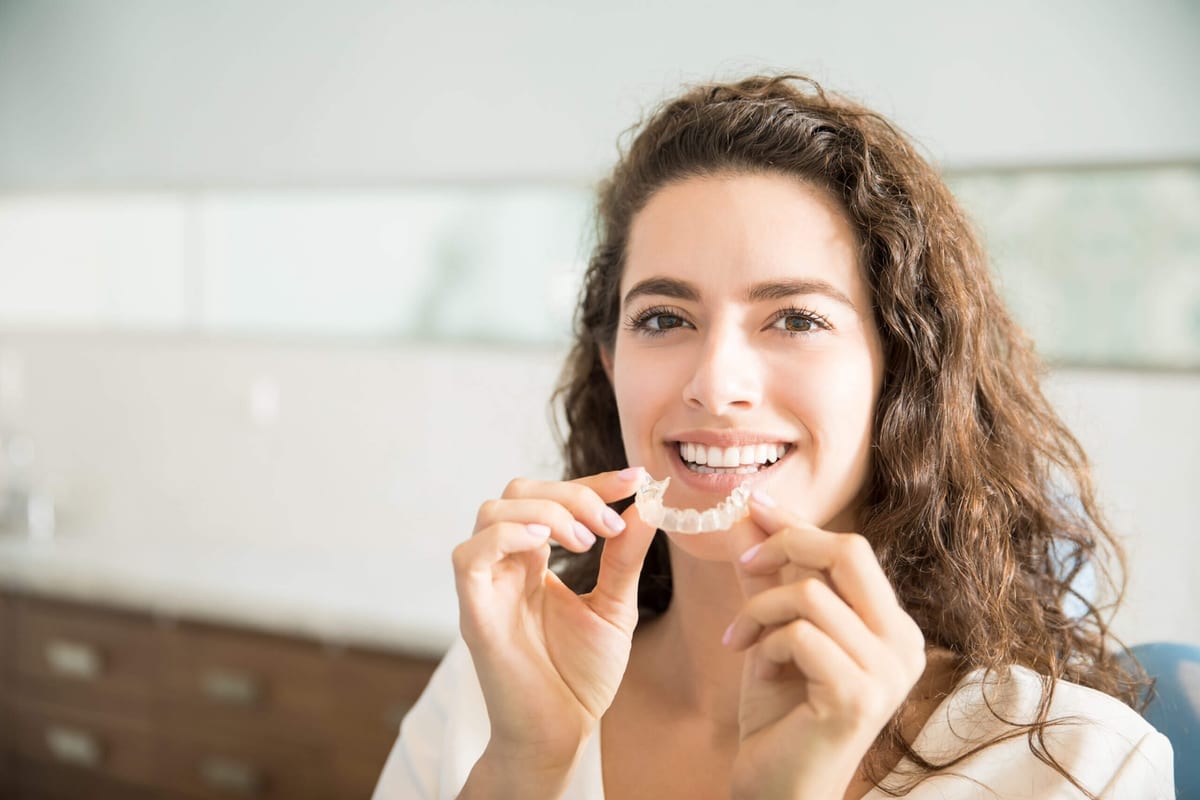
Invisalign has changed the way many people think about orthodontic treatment. Clear aligners are discreet, comfortable, and convenient. But here is a truth that does not always make it into the brochure: not every smile works with Invisalign. Understanding Invisalign candidacy is one of the most important steps before starting any orthodontic journey in Spring, TX. At Watson Orthodontics, Dr. Jim Watson believes every patient deserves honest, clear information before making a treatment decision.
This article breaks down what Invisalign can treat, where it falls short, and why some cases call for traditional braces instead. If you have been wondering whether Invisalign is right for you, this guide will help you understand the full picture.
What Invisalign Can Treat Effectively
Invisalign works well for a wide range of mild to moderate orthodontic issues. Clear aligners use a series of custom trays to gradually shift teeth into proper position. Many patients in Spring achieve excellent results with this approach.
Here are common conditions where Invisalign tends to perform well:
- Mild to moderate crowding — When teeth overlap slightly, aligners can create the space needed to straighten them.
- Mild spacing issues — Small gaps between teeth respond well to clear aligner therapy.
- Mild overbite — Invisalign can correct cases where the upper teeth sit too far over the lower teeth.
- Crossbite — Mild crossbites, where upper and lower teeth do not align properly, can often be addressed with aligners.
- Open bite — In some mild cases, aligners help bring the upper and lower teeth into contact.
The key word throughout is mild to moderate. When issues move beyond that range, the limitations of Invisalign become more significant. Dr. Jim Watson evaluates each patient individually to determine where their case falls on the spectrum.
Where Invisalign Falls Short: Complex Cases Explained
Clear aligners rely on controlled, gradual pressure. They work best when tooth movements are relatively straightforward. Severe or complex cases require forces and precision that aligners simply cannot deliver.
Severe crowding is a prime example. When teeth are significantly overlapped, aligners struggle to move them efficiently into position. The movements required are too large for clear trays to manage predictably.
Significant overbites, underbites, and crossbites also present challenges. An underbite, where the lower teeth sit in front of the upper teeth, often involves jaw alignment issues. Correcting jaw position typically requires the mechanical advantage of braces — and sometimes additional appliances or surgery.
Vertical tooth movements are another area where aligners have limits. Teeth that need to be extruded, or pulled further into the gumline, respond more reliably to wire-based mechanics. Rotation of certain teeth, particularly premolars, is also harder to achieve with clear aligners alone.
Patients considering Orthodontics Spring Tx Spring should know that a thorough evaluation always includes assessing these factors before recommending a treatment path.
How Dr. Jim Watson Evaluates Your Candidacy in Spring, TX
A proper candidacy evaluation goes far beyond looking at your smile in a mirror. Dr. Jim Watson uses digital X-rays, 3D imaging, and clinical examination to understand your full orthodontic picture. Bone structure, tooth roots, jaw alignment, and bite function all factor into the recommendation.
Several questions guide the evaluation process:
- How severe is the crowding or spacing?
- Is there a jaw alignment issue contributing to the bite problem?
- How much vertical tooth movement is needed?
- Are there any missing or impacted teeth that complicate treatment?
- Has the patient completed jaw growth, or are they still developing?
For younger patients, jaw growth can affect which treatment option is most appropriate. Watson Orthodontics offers Orthodontics For All Ages Spring, meaning treatment plans are tailored to each patient’s unique stage of development.
Honest candidacy assessment is not about steering patients away from what they want. It is about making sure the chosen treatment will actually work.
When Traditional Braces Are the Better Choice
Traditional braces remain the gold standard for complex orthodontic cases. They offer precise control over every type of tooth movement. For severe crowding, significant bite problems, and cases involving jaw discrepancies, braces often deliver more predictable results.
Here are situations where braces typically outperform Invisalign:
- Severe crowding — Braces move heavily overlapped teeth more effectively.
- Significant underbite or overbite — Wire mechanics and elastics address jaw-level issues better than aligners.
- Large rotations — Teeth that need significant rotation respond more reliably to bracket and wire systems.
- Vertical movement needs — Extruding or intruding teeth requires forces that braces deliver more consistently.
- Patient compliance concerns — Braces are fixed in place. Invisalign requires the patient to wear aligners 20 to 22 hours per day. Compliance is critical.
Choosing braces over Invisalign is never a downgrade. It simply means choosing the tool best suited to the job. Dr. Jim Watson always recommends the option most likely to produce the outcome you are looking for.
Making the Right Decision for Your Smile
The goal of any orthodontic consultation is to find the right path for your specific situation. Invisalign is an excellent option for many patients in Spring, TX. But it is not a one-size-fits-all solution, and the best orthodontists will tell you that directly.
When you come to Watson Orthodontics, you will never receive a treatment recommendation based on what sounds appealing in a commercial. You will receive an honest assessment based on your actual clinical needs. That is what quality orthodontic care looks like.
If you have questions about your smile, crowding, bite alignment, or whether Invisalign or braces is the right fit, the next step is simple. Book Now to schedule your appointment with our team.
Frequently Asked Questions
Can Invisalign fix an overbite completely?
Invisalign can correct mild to moderate overbites effectively. However, significant overbites — especially those involving jaw position rather than just tooth position — often require traditional braces and additional orthodontic appliances for full correction. Dr. Jim Watson will determine the severity of your overbite during your evaluation.
Is Invisalign a good option for teens?
Invisalign offers a Teen version designed for younger patients whose teeth are still developing. However, teen candidacy depends on compliance. Aligners must be worn 20 to 22 hours per day to work properly. For teens who may struggle with that commitment, braces may be a more reliable choice.
How do I know if my crowding is too severe for Invisalign?
Mild to moderate crowding typically responds well to Invisalign. Severe crowding — where teeth are significantly overlapping or rotated — usually requires traditional braces for the best outcome. The only way to know for certain is through a clinical evaluation with 3D imaging and X-rays at our Spring, TX office.
What happens if I start Invisalign but my case is more complex than expected?
In some cases, treatment may need to be adjusted mid-course. Dr. Jim Watson monitors progress throughout your treatment. If aligners are not achieving the desired movement, switching to braces or incorporating additional tools may be recommended. Regular check-ins help catch these situations early.
Does Watson Orthodontics offer both Invisalign and braces in Spring, TX?
Yes. Watson Orthodontics provides both Invisalign and traditional braces for patients of all ages in Spring, TX. Dr. Jim Watson evaluates each case individually and recommends the treatment most likely to achieve your goals effectively and efficiently.