
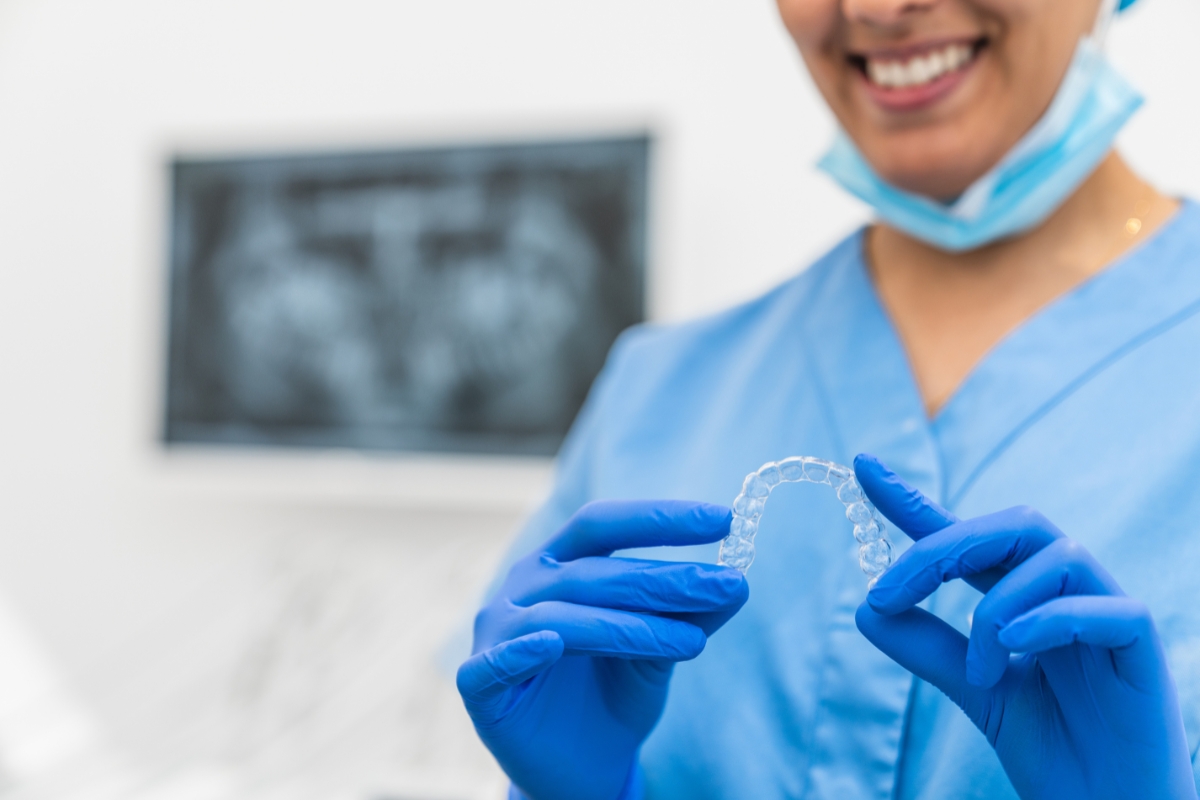
Did you just get a new set of trays and already notice a lisp creeping into your speech? You’re not alone! Many people experience this when they first start wearing their aligners or retainers. This “lisp phase” is a completely normal part of adjusting to your new Invisalign or clear aligners, and it’s only temporary. The good news is that there are simple steps you can take to help train your speech and get through this phase smoothly.
In this blog, we’ll provide you with helpful tips and tricks to make the first 48 hours more manageable and help you get back to speaking naturally. Whether you’re at home or out in the community, you don’t have to worry about your speech. Let’s dive into what causes the lisp and how you can address it effectively.
What Causes the Lisp Phase?
When you first start wearing a new tray, such as Invisalign, the lisp can feel pretty noticeable. But why does it happen? The main reason for the lisp is that your trays are applying pressure to your teeth. This pressure may shift the way your tongue interacts with the roof of your mouth or the front of your teeth, altering your pronunciation temporarily.
The unfamiliar feeling of having something in your mouth, like an Invisalign tray, can also make it difficult to form certain sounds at first. You may find that words with “S” or “T” sounds are especially challenging. This is because the aligners can take up space on the roof of your mouth, which can slightly obstruct the airflow needed for clear speech.
The good news is that this lisp is completely normal and, in most cases, temporary. It’s your mouth’s way of adjusting to the new tray. As you wear your aligners more and get used to the sensation, your speech will gradually improve.
In fact, Invisalign in Houston is designed to be clear and comfortable, and the lisp typically fades after a few days of wear. Most people find that within 48 hours, they’re back to speaking with confidence!
Tips to Train Your Speech in the First 48 Hours
Starting your Invisalign journey may feel a little awkward at first, especially with the lisp that often accompanies the new trays. But don’t worry. This phase is temporary, and with a few simple tips, you’ll be speaking more naturally in no time. Here’s how you can train your speech during the first 48 hours.
1. Start Speaking Early
The first step in overcoming the lisp is to begin speaking right away. It might feel odd or even a little embarrassing at first, but the sooner you start talking, the quicker your tongue will get used to the new tray.
You don’t need to have a full conversation right away, but try speaking aloud to yourself in your normal tone. This helps your brain and mouth adjust to the feeling of the tray, and over time, your speech will start to improve.
It’s completely normal to feel self-conscious at first, but don’t let that hold you back. Even if you’re only speaking in small phrases or reading out loud, the more you practice, the more comfortable you will feel. You can also start speaking with family members or close friends, where you’ll feel more at ease.
2. Read Out Loud
One of the most effective ways to train your speech is by reading aloud. Grab a book, article, or even the newspaper, and start reading out loud. This will help your tongue get used to making sounds with the tray in place. Try to read at a normal pace, and don’t rush through the words.
Another great way to practice is with tongue twisters! They’re not only fun but also a great way to exercise your mouth muscles and improve your pronunciation. Phrases like “She sells seashells by the seashore” or “Peter Piper picked a peck of pickled peppers” will challenge your articulation while helping you adjust to the tray. The more you do it, the easier it will get.
3. Slow Down
At the beginning of your Invisalign journey, it’s important to slow down your speech. Speaking more slowly will help you adjust to how your mouth feels with the tray and make it easier to form words without a lisp. You’ll also have more time to think about how your tongue moves with the aligners, which will naturally improve your clarity.
Try not to rush through sentences, and focus on saying each word clearly. While it may feel unnatural at first, taking your time will help reduce any awkwardness and allow you to make corrections as you go.
4. Practice in Front of a Mirror
Practicing in front of a mirror can be incredibly helpful. It allows you to visually check your mouth position and observe how your tray is sitting while you speak. It also helps ensure that your tongue is properly placed to help with clearer speech.
When you practice in front of a mirror, you’ll also be able to make sure your aligners aren’t shifting while you speak. This gives you the chance to make adjustments to how you’re positioning your mouth and tongue as you talk. Plus, it boosts your confidence when you see your improvement over time!
5. Hydration is Key
One often overlooked tip for improving your speech with Invisalign in Houston is staying hydrated. Dry mouth can make it more difficult to speak clearly, as it can affect your tongue’s movement and make your mouth feel uncomfortable. Drink plenty of water throughout the day to keep your mouth moist and help prevent any discomfort while you adjust to the trays.
Hydration not only improves your ability to speak, but it also keeps your aligners from feeling too dry or uncomfortable in your mouth. If you’re feeling a little tense or dry, sip water and keep your mouth lubricated for the smoothest experience possible.
What to Expect After the First 48 Hours
After the first 48 hours, you should notice an improvement in your speech. As your mouth gets more accustomed to the Invisalign aligners, the lisp will gradually decrease. The first couple of days are the hardest, but it’s important to stay patient and stick to your routine.
During this adjustment period, you’ll also likely become more aware of how the tray fits, and any initial discomfort will start to subside. As your tongue adjusts to the presence of the tray, you may also find that your speech becomes clearer and more fluid.
You might notice that your speech feels more natural after a few days. While it may take a little time for some, most people experience a significant reduction in their lisp after wearing their trays consistently for 48 to 72 hours. Keep practicing speaking, reading, and using your tray as you would normally.
When to Seek Help
Though the lisp is typically temporary, there are a few scenarios where you might want to consult with your orthodontist. If your lisp persists beyond a few days or if your speech feels severely impacted, it’s worth seeking professional advice. It could be that the tray isn’t fitting properly or needs to be adjusted.
Additionally, if you experience discomfort or difficulty speaking beyond the first few days, it might be a sign that your tray needs fine-tuning. Whether it’s a misalignment or some other issue, don’t hesitate to reach out to the friendly team at Watson Orthodontics. We’re here to help ensure that your Invisalign treatment is as smooth and effective as possible.
To recap, here are the key tips to get through the lisp phase:
- Start speaking early to get your tongue used to the new tray.
- Read aloud and practice with tongue twisters to improve clarity.
- Speak slowly, practice in front of a mirror, and stay hydrated.
Remember, the lisp phase is only temporary, and with a little patience and practice, you’ll be speaking naturally in no time! If your lisp continues past the first few days or you experience discomfort, don’t hesitate to book an appointment with Watson Orthodontics. We’re here to ensure your Invisalign treatment goes smoothly and helps you achieve the beautiful smile you’ve always wanted.
People Also Ask
The lisp usually lasts between 48 and 72 hours as your mouth adjusts to the new aligners. Most people notice significant improvement after the first few days.
Yes, it’s completely normal. The lisp occurs because your tongue is adjusting to the presence of the aligners, and it will gradually go away with practice.
Once your mouth adjusts to the aligners, your speech will return to normal. Any initial lisp is temporary and will improve over the first few days.
Yes, a little discomfort is normal when you first start wearing aligners. Your teeth and mouth are adjusting to the new trays, but this should subside after a few days.
Practice as often as possible during the first 48 hours to get used to the feeling of the aligners in your mouth. Regular practice will speed up the adjustment period.